
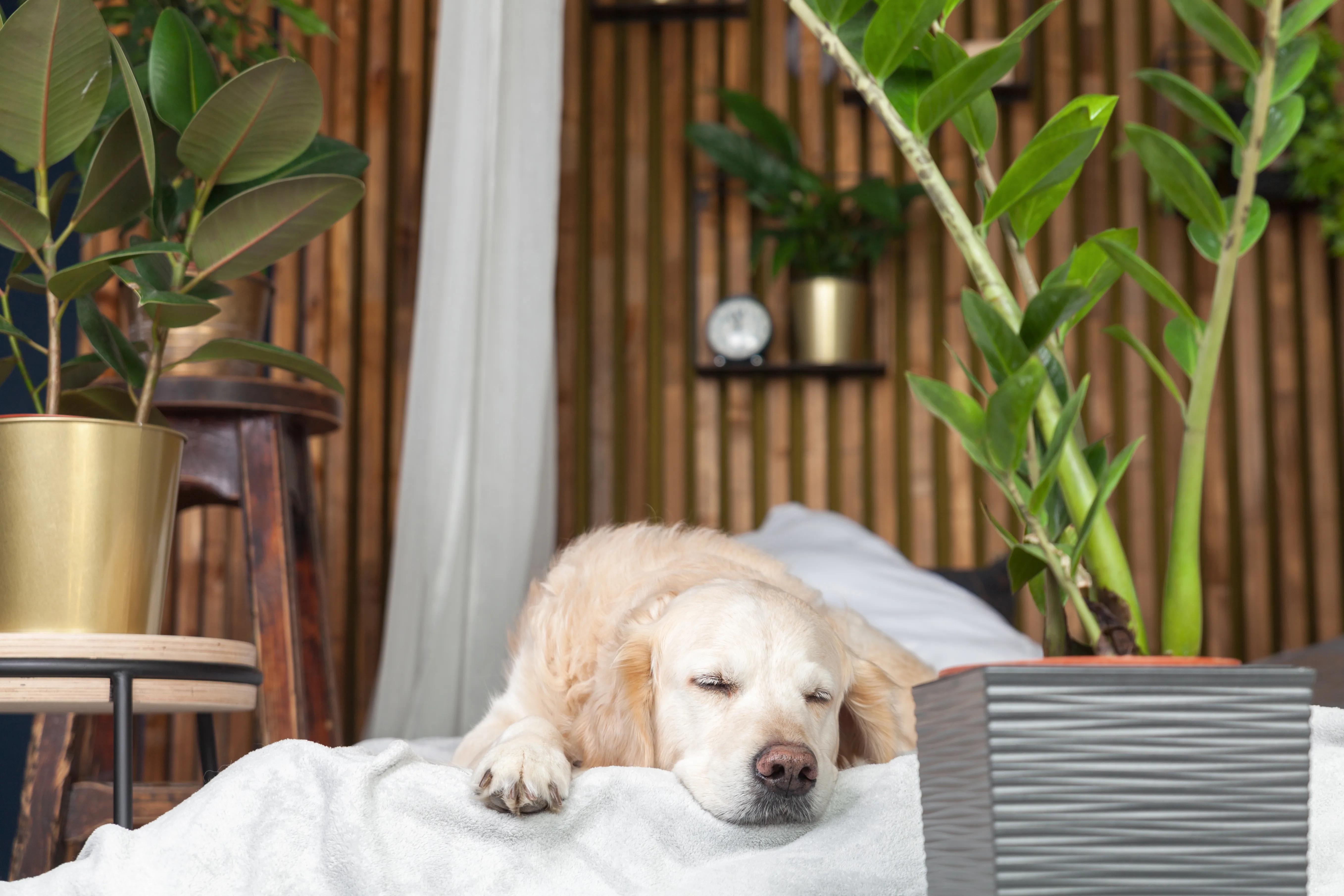
Your dog does not complain about the thermostat, but their behavior tells you everything. Panting in one room, avoiding another, or constantly shifting spots usually signals uneven indoor conditions.
Creating the perfect indoor climate for dogs starts by adjusting one room at a time.
Living Room Tip: Manage Sunlight and Airflow
Living rooms collect heat throughout the day from windows, electronics, and foot traffic. Even a few degrees of change can make a lounging dog uncomfortable.
Indoor air pollution levels can sometimes exceed outdoor levels several times over. For a dog resting close to the floor, trapped dust and particles matter.
Keep temperatures between 68 and 75 degrees Fahrenheit and prevent airflow blockages. Move pet beds away from direct sunlight and avoid placing furniture over vents so cool air circulates evenly.
Bedroom Tip: Balance Humidity for Restful Sleep
Dogs sleep up to 14 hours a day, so bedroom comfort directly affects overall health. Dry winter air or sticky summer humidity can disrupt deeper rest cycles.
High humidity increases overheating risks and may worsen respiratory stress in dogs. Maintaining indoor humidity between 30 and 50 percent creates a more breathable environment.
Use a hygrometer to monitor moisture levels and adjust with humidifiers or dehumidifiers as needed. Position beds away from vents to prevent sudden temperature bursts that interrupt sleep.
Kitchen Tip: Reduce Heat and Airborne Irritants
Kitchens warm up quickly from ovens and stovetops. Hard floors may feel cool, but the surrounding air often rises fast during cooking.
Limiting heavy fragrances and running exhaust fans during cooking protects sensitive canine airways.
Strong ventilation and consistent airflow prevent heat buildup. If your dog frequently leaves the room during meal prep, temperature spikes may be the cause.
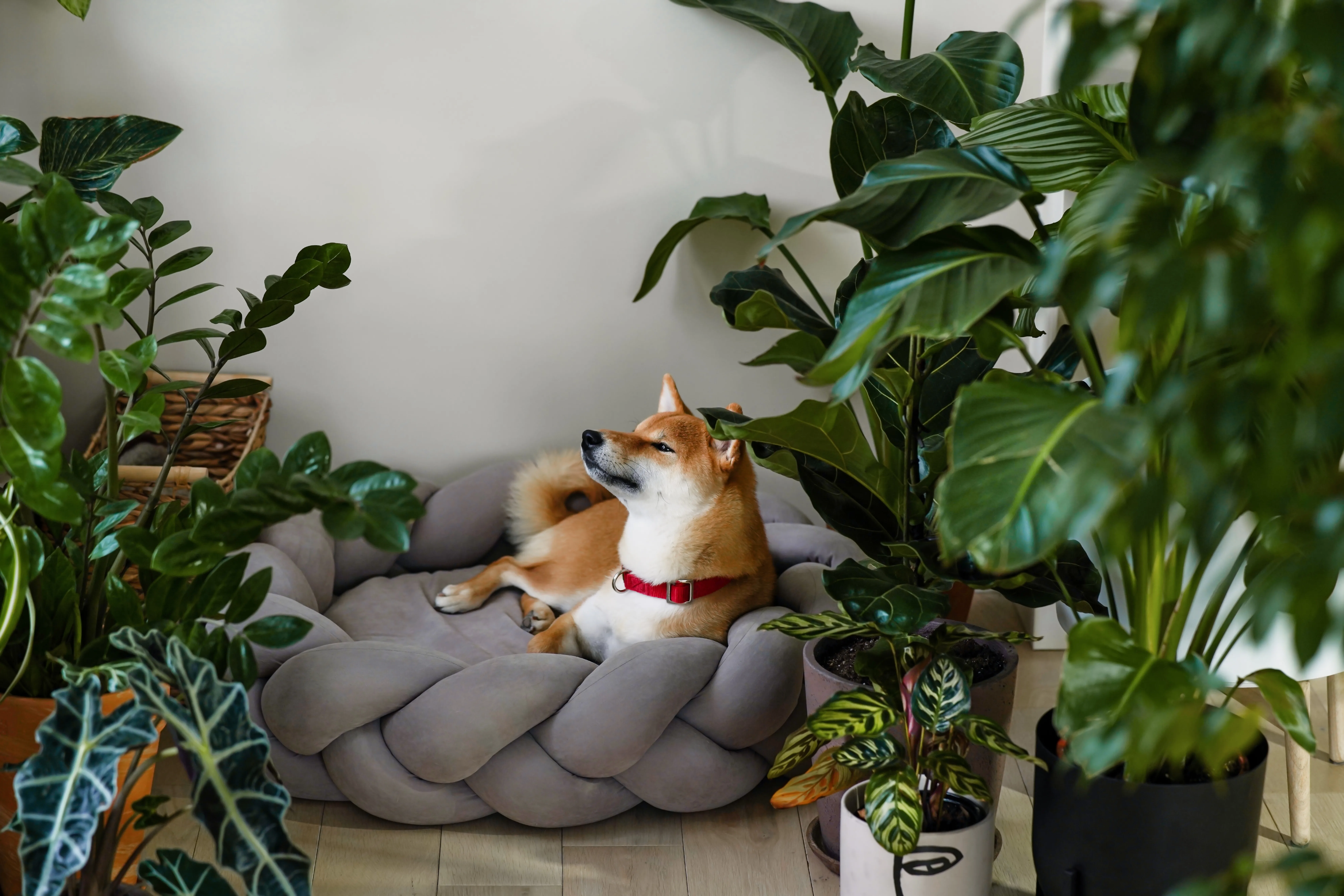
Basement Tip: Eliminate Cold Spots
Lower-level rooms often feel cooler than the rest of the home. Cold floors and weak airflow can discourage your dog from using those spaces. Balanced heating without trapped pollutants supports safer year-round comfort.
Seal drafts around windows and doors, and ensure supply vents are fully open. Area rugs can also reduce discomfort from cold surfaces.
Whole-Home Tip: Use Zoned Control for the Perfect Indoor Climate for Dogs
Different rooms rarely need the same temperature at the same time. Active living areas, quiet bedrooms, and lower-level spaces all behave differently.
Many homeowners improve consistency with a dual zone mini split system, which allows separate control for two areas without overcooling the entire house.
Zoned systems help maintain the perfect indoor climate for dogs. They eliminate hot and cold pockets that trigger restlessness.
So, walk through your home at different times of day and observe where your dog chooses to settle. Small, room-by-room adjustments create a noticeable difference in comfort.
If uneven temperatures continue to affect your pet’s behavior, exploring targeted climate-control options can help you create a more balanced, dog-friendly home environment.
A More Comfortable Home for You and Your Dog
Creating the perfect indoor climate for dogs takes small, room-by-room adjustments. Focus on airflow, humidity, and temperature control to keep your pet comfortable, healthy, and relaxed in every space.
And if this article was helpful, be sure to take a look at our other content.
